
The Consolidation Phase.
Trying to live some lives I don't write about (on Linkedin or Instagram atleast).
#thought
#life
EN
• 6 min read
We see people who made it and assume we can do the same. But success stories rarely show us the invisible staircase we have to climb.
I’m pretty sure that just because something worked for someone years ago doesn’t mean it will work for you today. There are invisible staircases you have to climb, and you can’t simply skip them.
My mom once told me that finding a job in the 2000s was easier than it is today. Back then, people had to look through newspaper job vacancies, yet the chances of getting accepted seemed higher than they are now. Today, even entry-level positions can demand an unreasonable amount of qualifications and experience.
I remember hearing about someone who had to go through an application review, an online test, a Focus Group Discussion, and an interview just to get an internship that paid IDR 1,000,000–3,000,000 per month.
When I got my first internship in 2023, after taking the test in 2022, all I had to do was complete a simple take-home test and have a casual online interview. We talked about random things, including what I would do in the role. The job itself was flexible, with the freedom to work from home or the office. There were no strict restrictions and barely any pressure.
The difference was noticeable, at least from my own experience. It made me wonder how much the expectations of entering the workforce had changed.
Perhaps this is one reason people are increasingly attracted to entrepreneurship. If getting a job has become this difficult, why not just start a business instead? Why spend years working for someone else when you could build something of your own?
It sounds reasonable until you ask a more important question.
If I want to start a business, who is going to buy what I sell?
Starting a business is not simply an alternative to being an employee. It requires you to solve a problem that people are willing to pay you to solve. You need to understand your market, acquire customers, manage money, make decisions under uncertainty, and keep the business running even when things don’t go according to plan.
You don’t automatically acquire these abilities just because you decide to become an entrepreneur.
I think there is a significant gap between being a fresh graduate and being capable of running a sustainable business. Wanting to escape employment because you don’t want to work for someone else, or because you don’t want to spend your entire life working, is not a particularly good reason to start a business.
Being a business owner doesn’t mean you stop working. In many cases, it means your work follows you everywhere. Your finances, reputation, employees, customers, and sometimes even your family depend on decisions you make. You might have more autonomy, but you also carry risks that would otherwise belong to an employer.
And yet, people often talk about entrepreneurship as if it were the easier option.
I suspect part of the problem is that we tend to see the outcome without understanding the process behind it. We see successful business owners, financially independent people, and founders who appear to have complete control over their lives. We see the freedom they have today, but not necessarily the years of uncertainty, repetitive work, mistakes, and sacrifices that helped them get there.
This is where survivorship bias comes in.
Survivorship bias occurs when we focus on the people who succeeded while overlooking those who attempted the same thing and failed. We hear about the school dropout who built a successful company, but rarely examine all the people who dropped out and never built anything sustainable.
Their stories are compelling precisely because they are exceptional. But an exceptional outcome does not establish that the same path is likely to work for everyone.
The same applies to our parents’ generation. Some people managed to build successful careers or businesses without a degree, extensive qualifications, or the opportunities we consider necessary today. Their achievements are real, but their existence alone doesn’t tell us how likely we are to reproduce their results under different economic conditions.
Just because someone made it doesn’t mean the path was easy, and just because the path worked for them doesn’t mean it will work for you.
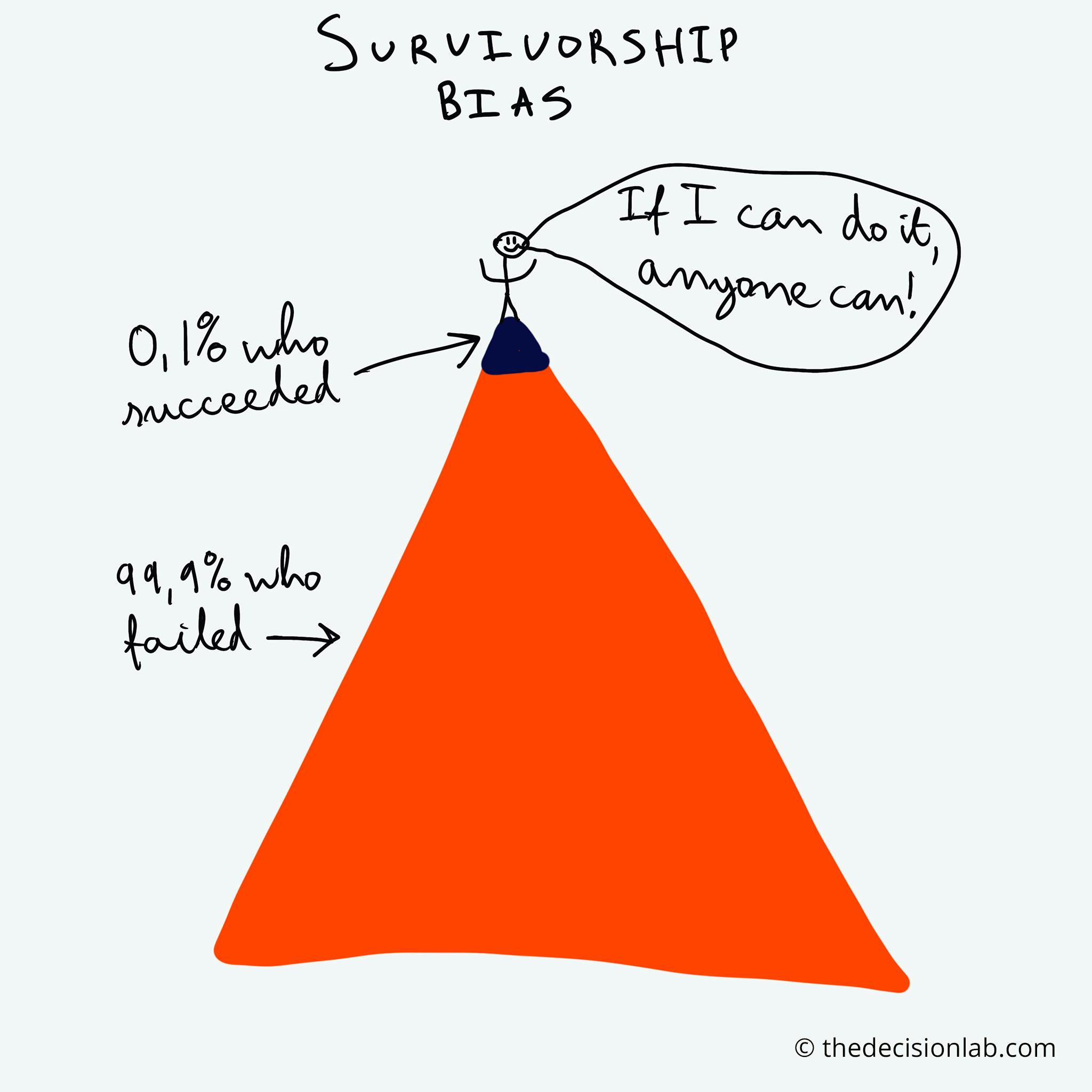
Image source: The Decision Lab
There is another problem here: we tend to underestimate what we don’t know.
When someone has little experience running a business, they may not fully understand the complexity of managing one. They might assume that having a good idea, enough capital, and the willingness to work hard will be sufficient. But without experience, they may not even know which problems they should anticipate.
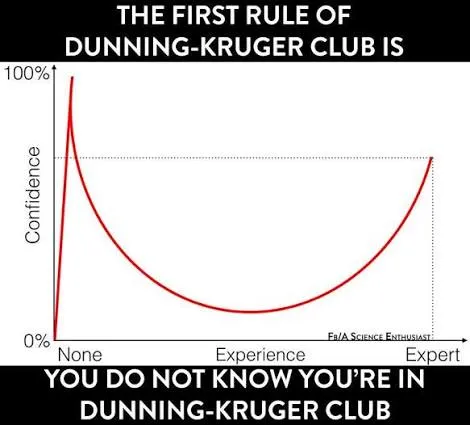
This resembles the Dunning–Kruger effect, although the concept is more specific than simply being overconfident. It describes how people with limited competence in a particular area may lack the ability to accurately assess their own competence. Someone who has never managed a business may therefore underestimate the skills and knowledge required to do so.
Of course, not every aspiring entrepreneur suffers from this effect. Some people understand the risks and still choose to start early, learning through direct experience. That can be a perfectly reasonable decision. The problem is assuming that something is easy simply because you haven’t experienced its difficulties firsthand.
The world of entrepreneurship is not a shortcut around the learning curve. It is another environment in which that process takes place.
You can learn through employment, independent projects, mentorship, experimentation, or running a business yourself. None of these paths guarantees success, and working as an employee does not automatically prepare you to become a business owner. What matters is whether you are actually developing the skills and judgment your goals demand.
Sometimes, taking your degree seriously, getting a job, learning how an industry operates, building professional relationships, and saving money can be a better starting point than immediately trying to become an entrepreneur. You can accumulate experience, identify problems worth solving, and discover opportunities you wouldn’t have recognized otherwise.
Then, when you eventually start a business, you have something more substantial than the desire to be your own boss. You have knowledge, experience, and a clearer understanding of what you’re getting into.
You don’t have to become an employee first. But you do have to learn somehow.
The point is not to discourage people from pursuing ambitious goals. It is to recognize that the freedom we admire in successful people is often the result of years of work that we never get to see.
Don’t confuse wanting the destination with being prepared for the journey. Before you decide to skip the staircase, make sure you understand what it takes to climb it.
Trying to live some lives I don't write about (on Linkedin or Instagram atleast).

Hardwork is given, but it's all based on luck I guess.

Sometimes, things just happen, and there is no lesson to be learned